First Dated medieval coin ????

26 αναρτήσεις

» Γρήγορη πρόσβαση στην τελευταία ανάρτηση

I was always wondering...

This Polish guy, sitting on the Hungarian throne was the first one to come up with the idea of actually placing a mint year on the coin?

 - I doubt, I sincerely doubt!

But this is the one I know.
The first coin bearing a mint year from 1503 appears on this coin:
https://en.numista.com/catalogue/pieces22140.html

If you have earlier examples, please share! (educated Romans do not count, only dark aged medieval Europeans) X-D
The oldest penny with a date on it,i think .Is an England Charles II 1670 manndy coinage. But this is back when pennys were made of silver.
  There may be a spanish coin older not sure i will have to look
It is, what it is, or is it.
Iam thinking the oldest i can find right now is spanish netherlands Brabant  courte Karl V 1543
It is, what it is, or is it.
Απόσπασμα: ALLRED1950Iam thinking the oldest i can find right now is spanish netherlands Brabant  courte Karl V 1543
that is still 40 years after the Polish/Hungarian kid invented it.  :(  We must have earlier samples....
Απόσπασμα: imrehI was always wondering...

This Polish guy, sitting on the Hungarian throne was the first one to come up with the idea of actually placing a mint year on the coin?

 - I doubt, I sincerely doubt!

But this is the one I know.
The first coin bearing a mint year from 1503 appears on this coin:
https://en.numista.com/catalogue/pieces22140.html

If you have earlier examples, please share! (educated Romans do not count, only dark aged medieval Europeans) X-D
I don't have it, but I heard there is a danish coin from the 1300s that is dated.
Hi mates


the first Gregorian coin should be from 1582 because the Georgian calander started in 1582 :P

http://en.wikipedia.org/wiki/Gregorian_calendar

Or the UK 1752
Pleae check my own shop:

https://www.lastdodo.nl/nl/shops/Jelle097

World wide shipping for the real shipping price!
Απόσπασμα: jelleHi mates

the first Gregorian coin should be from 1582 because the Georgian calander started in 1582 :P

http://en.wikipedia.org/wiki/Gregorian_calendar

Or the UK 1752
ooops, .... VERY correct B) .... poor Gregory was born later...
So, maybe not Gregorian, but Julian? ... anyways medieval coinage dated?

Thanks, Jelle, for drawing the attention to my superficial historic knowledge... I have changed the title accordingly  ;)
Hey imreh are Hungary 1 denar Maria dated?
And i think there are some earlier ones from Frisia. But date is written with roman numbers
  Good to hear from you my freind. Have to go now i will look back on this
It is, what it is, or is it.
btw, my best friend, evryone knows him afcourse! Because it is almost evryones best friend except when you dont know him, his name is google, gave me this website:

http://www.medievalcoinage.com/earlydated/
Pleae check my own shop:

https://www.lastdodo.nl/nl/shops/Jelle097

World wide shipping for the real shipping price!
https://en.numista.com/catalogue/pieces42825.html
Here's a nice arab example
Απόσπασμα: ALLRED1950The oldest penny with a date on it,i think .Is an England Charles II 1670 maundy coinage. But this is back when pennys were made of silver.
I've got the catalog "Coins of the British World, complete from 500 AD to the present (1962). In there, the oldest British penny coins were  a Charles I (1625-1649) 1 penny 1644, Exeter Mint and a 1 penny 1644, Oxford Mint. The third oldest is the Charles II (1660-1685) 1 penny 1670 that you mentioned (and these three coins were indeed all silver ones).

The oldest coin with a date I've found in that catalog was an Edward VI (1547-1553) 1 shilling 1548.

My own oldest coin is a Felipe II copper coin from 1596. He was the king of Spain but also ruler of the Spanish Netherlands (and who knows how many regions more). I haven't a catalog with Spanish coins dating so far back, so I don't know yet what my coin exactly is. It probably is a liard.
Coins have been dated for centuries, so it all depends on what you mean by "dated".  One of the best resources on dating in numismatics is the two-volume book "Tempus In Nummis" by James D. Sweeny.  

Consider the following Georgian coin which is dated, in the Georgian "Paschal cycle":
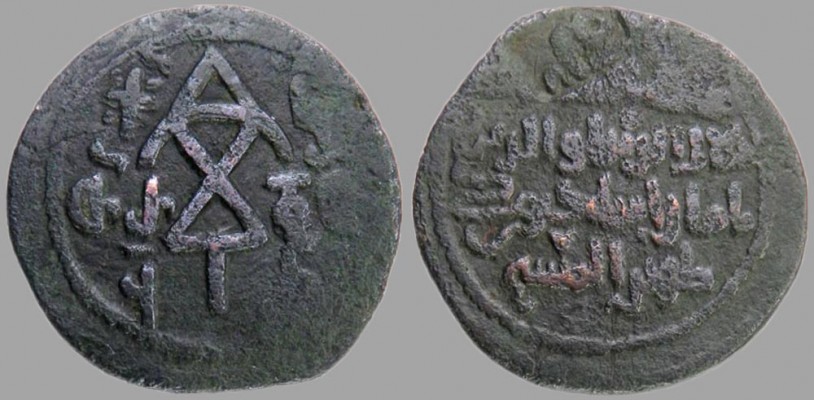


Obv: Bagratid royal emblem in the form of a standard; Georgian initials to left and right: ႧႰ=ႧამაႰ (T'amar) and ႣႧ=ႣავიႧ (David); Georgian initials on top left and top right: ႵႩ=ႵორონიႩონსა (Koronikonsa/Year); Georgian initials on bottom left and bottom right: ႯႩ=420
Rev: Christian inscriptions in arabic script; countermark #4

ملكة الملكات  (Malekat al-Malekaat(s); Queen of Queens)
جلال الدنيا و الدين (Jellal Al-Dunya Wal Din; Glory of the World and Faith)
تمار ابنة كوركى (Tamar Ibnat Kurki; T'amar daughter of Giorgi)
ظهير المسيح (Zahir Al-Massih; Champion of the Messiah)

The Georgian year is encoded using the "Paschal cycle".  This dating system is based on the creation date being March 22, 5604 BC.  From this date, they ran through a 532-year cycle.  So, Year 1 was March 22, 5604 BC for the 1st cycle.  And the 13th cycle's Year 1 was March 22, 781 AD.  For years 346 to 532, add 780 to obtain the corresponding year in AD.  The year starts off at March 22nd for each AD year.  So, 420 + 780 = March 22, 1200 AD.

Another example is the dating of coins using regal years, and the Byzantine coinage is an example of that:

Byzantine Empire: Justinian I (527-565) Half Follis, Regal Year 12, Constantinople (Sear-165)


Obv: D N IVSTINIANVS P P AVG. Helmeted and cuirassed bust facing, holding globus cruciger and decorated shield; cross right in field.
Rev: Large K between ANNO - XII, cross above; E below.


The Chinese also minted dated coins and an example of that can be seen here:

Imperial China, Southern Song: Kai Xi (1205-1207) FE 2 Cash, Tongan Mint (Hartill-17.529)
Emperor Ning Zong (1195-1224)


Obv: 開(开)禧通宝 Kai Xi tong bao
Rev: 同 Tong above. Tongan mint, Anhui. Numbers for the year of casting below. 三 san (Year 3 - 1203)


And of course, the earliest Islamic coins where also dated as well, like the following:

Umayyad Caliphate: Anonymous (738 AD) AE Fals, Wasit Mint (Walker-941; Lavoix-1522; Nützel 2049-2050; Album-205)

Obv: Within a double circle, لا اله الا الله وحده لا شرك له (There is no God but Allah alone. There are no others with him); five annulets enclosed in outer margin.
Rev: At center, محمد رسول الله (Muhammad is the apostle of Allah); in margin, بسم الله ضرب هذا الفلس بواسط سنة عشرين ومائة (In the name of Allah this fals was struck at Wasit in the year 20 and 100); double outer margin enclosing five annulets.


And finally, a more "normal" coin which is what I think you meant, but that is a bit biased:

Hungary: Ferdinánd I (1526-1564) BI Denár (Huszár-935, Réthy-40, Unger-745a)

Obv: FERDINAND · D · G · R · VNG ✶ 1537 ✶; Quartered Coat of Arms (strips, double cross, leopard heads, Bohemian lion), at the heart , Austrian Shield
Rev: PATRONA · ✶ · VNGARIE; Virgin Mary, crowned, enthroned facing, holding infant Jesus; across field, K-B (Kremnitz)

There are many pre 1500 coins with gregorian calendar dates on them, gregorian dated coins seem to have an increase in the latter part of the 15th century.
Im not sure what the first coin is, previous ones seemed to use Roman Decimals or mark the year of a ruler, or the start of a new dinasty.


Everyone is subjective with this with another view but for me the medieval era ended somewhere around the 1450´s
If you like coins, medals and tokens with ship motives follow my new instagram account with regular updates @numisnautiker
From time to time I sell some coins on Ebay make sure to follow me @apuking on Ebay.
I would also like to point out that the following references are also quite handy, if you are interested in dated European coins:

Albert Frey's The Dated European Coinage prior to 1501 is available for download at Archive.org.
An updated version of Frey's book by Robert A. Levinson The Early Dated Coins of Europe 1234-1500 is the defacto-standard reference book.
I, also, recommend the following website on Early Dated European Coins  http://www.medievalcoinage.com

The earliest dated European coin with an Anno Domini of 1234 is the penning of Valdemar II the Victorious (1202 - 1241) from Denmark.  It went for auction in 2008 for an opening bid of € 33,500, but it did not sell.  The coin shows a crown on the obverse and a miter (bishop's hat) on the reverse and bears the following legends in uncial script: +ANNO DOMINI / MCCXXXIIII.

Απόσπασμα: eitan190
Απόσπασμα: imrehI was always wondering...

This Polish guy, sitting on the Hungarian throne was the first one to come up with the idea of actually placing a mint year on the coin?

 - I doubt, I sincerely doubt!

But this is the one I know.
The first coin bearing a mint year from 1503 appears on this coin:
https://en.numista.com/catalogue/pieces22140.html

If you have earlier examples, please share! (educated Romans do not count, only dark aged medieval Europeans) X-D
I don't have it, but I heard there is a danish coin from the 1300s that is dated.
Ha! So even though I was wrong about the year, I was right that it was from denmark!
Απόσπασμα: imrehI was always wondering...

This Polish guy, sitting on the Hungarian throne was the first one to come up with the idea of actually placing a mint year on the coin?

 - I doubt, I sincerely doubt!

But this is the one I know.
The first coin bearing a mint year from 1503 appears on this coin:
https://en.numista.com/catalogue/pieces22140.html

If you have earlier examples, please share! (educated Romans do not count, only dark aged medieval Europeans) X-D
ciao imre . sei ancora vivo ?  io sono ancora in attesa di una tua risposta . hello imre. you're still alive? I am still awaiting a reply. (;0
https://en.numista.com/catalogue/pieces46306.html
I'm reviving this thread to post some coins that are relevant to the OP.
.
This Obol was struck in the Es Safar year of 1204. The calendar system was
introduced by Augustas 38 B.C. Our calendar would date the coin to 1166 A.D.
.
This piece from Aachen is the first collectible early dated coin.


This gold coin is the first dated gold coin from the year 1436. I am using coins that use
Christian dated calendar system. There are of course coins from the Muslim countries
that start with the date 622 A.D. Other areas of the world such as India and the Orient also
produced coins from this time. Many Byzantine rulers dated their coins according to how
long they ruled. Let me know if you would like to see other pre 1500 A.D. dated coins.
I will have to learn how to post on this forum.
Απόσπασμα: "arpad"Many Byzantine rulers dated their coins according to how ​long they ruled.
​Yes, regnal dates on Byzantine coins go well into the 7th century AD (and IIRC there are even some 8th century examples).

Two other interesting dated types (well, one type and one series) from dark-age-ish medieval Europe(-ish):
- the mid-13rd century Crusader imitative dirhams from Acre, some of which had AD dates (in Arabic);
- and the 533 AH = 1138/9 AD follaro from the Kingdom of Sicily, which appears to be the world's oldest coin dated in positional* numerals (the last line of the reverse legend is a highly archaic form of the digits ٥٣٣ = 533).
Neither is (yet) on Numista, alas (at least, as far as I can tell).

My own oldest dated coin is from 138 BC (dated ΔOP = 174 in the Seleucid calendar); my oldest AD dated coin is, I believe, from 1517 AD, though I vaguely recall having possibly bought an even older Polish coin.


*) i.e. the usual decimal numbers - as opposed to spelled-out numerals, Roman numerals, or a letter-based system

From what I read, the oldest Roman Numeral medieval coin, was some Danish or German piece that had MCCXXXIIII on it (1234) and oldest in fully modern numerals was a Swiss coin from Basel dated 1484, but there are some Flemish or Burgundian coins from like 1455 or something that have a 4 that still looks like a loop.


I have seen Arabic coins as far back as AH 40 (661AD) dated in their calendar.


My oldest is a 1554 Mary Shilling, but then I only really have English coins that old.


Oldest clear date for me


1561 Sixpence.


Britain was very late putting proper dates on coins compared to the rest of Europe, Scotland did not do one until 1539 and 1551 for England (1548 for Roman Numerals) due to them using Mintmarks since the 1300s which can be dated to within a year or two.


The Germans, Austrians and Polish were dating coins by the 1500 era, Spain, the Scandinavian kingdoms around 1530, France and Italy in the 1540s etc. The Swiss and Hungarians got a head start in the 1480s and It was states like Flanders and Burgundy dating coins in the 1450s. Readable dates thus really were a Renaissance thing. On the other hand, you have to wait until 1700 to see a Russian dated coin

I love coins. Especially silver, gold and anything really old.
Member of the Royal Numismatic Society of New Zealand and the Auckland Numismatic Society

Moneytane


The Germans, Austrians and Polish were dating coins by the 1500 era, Spain, the Scandinavian kingdoms around 1530, France and Italy in the 1540s etc. The Swiss and Hungarians got a head start in the 1480s and It was states like Flanders and Burgundy dating coins in the 1450s. Readable dates thus really were a Renaissance thing. On the other hand, you have to wait until 1700 to see a Russian dated coin

Hungary really started in 1503 (the 1480s issues are outliers, and there are comparable examples from Scandinavia), though that was preceded by many subtypes and mintmarks that were only used for short periods in sporadic bunches all across the 15th and 14th century (and occasionally even earlier).

Poland started in 1507 (though there is a popular Silesian type dated 1506 in the name of the guy who became king of Poland in 1507, and it's often considered to be the first Polish coin).


The first Russian dated coin was actually from 1596! But it had a date in the local calendar (7104, written in letters as РД with the thousands omitted), not an AD date. The first AD date was indeed 1700, when the calendar changed.

My olderst dated coin (I think) is the N#81153. Mine is dated 95 AH, which corresponds to 713/714 AD.


UPDATE: I just realised it's medieval coins, and maybe the 700's doesn't qualify as medieval. So, then I have my N#85517, which is dated 762 AH (but actually it's the error version with the 722 date), and this corresponds to 1361.

Ngdawa, many of us argue medieval means Middle Ages and its accepted that these started after the fall of the Western Roman Empire.


In the English system we are taught the Middle Ages run from at least 476AD or even as early as 409AD when the Romans left Britain or when Hengist and Horsa arrived in 445AD, to 1485 with the Battle of Bosworth field and the succession of Henry Tudor as Henry VII.


We see the Middle ages as Early 400s to 1066AD, Middle or High Middle Ages 1066 to 1349 (Black death) and Late Middle Ages 1350 to 1485 or even 1550, as parts of England were still quite medieval well into the 1500s.


Europe usually does Early Medieval 450 - 1050AD, High Middle ages 1050 - 1300/50 and Late Middle Ages 1350 - 1450/1600 depending on the part of Europe. Most say the Renaissance started in Italy around 1400, but it did not reach north of the alps until the very end of the 15th century and into the 16th. Many Lutheran countries see the Middle Ages ending when Lutheranism was adopted (Usually the 1530s).


Early Islamic empires count well into Medieval times and if anything were far in advance of the Middle ages in Europe, especially the first millienium. Those coins were well struck like Roman and Greek ones, rather than the thin and crudely punched pennies of pre 12th century Europe.


I mean the 700s, the elite in Britain and France at least were literate in Latin, Greek and French, they had coins, books, the church and rulers like Pepin the Short, Charlemagne, Offa, Ecbert, etc. They would count as medieval in my book.

I love coins. Especially silver, gold and anything really old.
Member of the Royal Numismatic Society of New Zealand and the Auckland Numismatic Society

N#130413

First dated coin by Grand Duchy of Lithuania. 1508. Probably neighbors had earlier examples.


N#45866 - 1504


N#267683 - 1372

tokul

N#130413

First dated coin by Grand Duchy of Lithuania. 1508. Probably neighbors had earlier examples.


N#45866 - 1504


N#267683 - 1372


You seemnyou have missed/ignored the linked coin to the one in Aachen:

N#186089 - 1234

» Πολιτική φόρουμ

Η ζώνη ώρας που χρησιμοποιείται είναι η UTC+2:00.
Η ώρα είναι 04:37.