Does anyone know why the British coins have the monarchs facing in alternating directions?
The latest Charles III coins have him facing left, QEII was facing right, George VI was facing left, there is the anomaly that George V is also facing left and then all the ones before them alternate right, left, right left, etc. I'm assuming the Edward VIII coins that would have come after George V would have been facing right, but were never issued, then they continued with the sequence by making George VI's coins facing left.
Started in the time of Charles II, symbolic and possibly easier for those who could not read or write, especially as dynasties controlled the throne and some brothers (Charles and James for instance) looked alike. The period 1660 - 1750 was also notorious for the long periwigs/perukes that all kind of looked the same.
Edward VIII bucked the trend as he felt his face on the side he posed was not attractive enough and thus wanted to look the other way.
Continuing backwards
Mary actually faced same way as her husband due to co monarchy
Charles II started it, some say he did not want to face the same way as a traitor as Cromwell faced left. I don't have any Cromwell coins as they are insanely rare, but going backwards more we get.
Philip and Mary face each other, on her coins Mary usually faces left like her sister Elizabeth
Most of Edward VI's coins he is facing right - but on these ¾ shillings of 1551/3 he faces leftwards
Henry VIII coin, all of Henry VII's, VIII's and Edwards coins except type above, they faced right or directly at you, except for some posthumous shillings and groats of Henry VIII in which he faced ¾ rightwards.
Standard portrait for 99% of English coins issued 1279 - 1501
Standard type of portrait, English coins issued c.950AD - 1279.
So in my opinion this craze obviuously started with James posing away from Elizabeth and was carried one by each succeeding monarch.
I love coins. Especially silver, gold and anything really old.
Member of the Royal Numismatic Society of New Zealand and the Auckland Numismatic Society
Edward VIII on a pattern with his “attractive” side.
I love coins. Especially silver, gold and anything really old.
Member of the Royal Numismatic Society of New Zealand and the Auckland Numismatic Society
Ah, cool. So he was going to have his portrait facing left, but they just pretended that he wasn't going to, and continued with what the sequence would have been.
Sounds like the author wasn't really a fan of the practice.
According to Pepping's book - New Zealand History Coin, the request for an uncrowned effigy was granted to “White Dominions” only and in 1936 included Australia, Canada, South Africa and New Zealand. All other dominions (Which by 1936 included Southern Rhodesia) had to use the crowned effigies designed by Percy Metcalf, rather than the uncrowned effigy by Humphrey Paget.
Colonial effigies (No crowned colonial portrait of E8 exists just his name written on a handful of coins or a cypher)
Fijian coins, I think was to let the natives know who big white boss was. South Africa was a grey area as even in 1937 it was 75% Black, but had some overproud white people who wanted the full recognition of the British (The Afrikaners were on the edge of secession).
Dominional effigies - These are NZ predecimal coins. In 1937 NZ was 97% white and mostly British white and therefore considered the same level as the British population, whereas places like India, Fiji, African and Caribbean colonies had large non white populations and the racial standards of the 1930s, dictated that whites had to enforce their control over them (This racist bullcrap would not fly today and nor should it, so yes even coins were rayciss).
I love coins. Especially silver, gold and anything really old.
Member of the Royal Numismatic Society of New Zealand and the Auckland Numismatic Society
Sounds like the author wasn't really a fan of the practice.
Indeed. For my part I like this tradition. Some people argue that looking left is looking backwards, but this is just because our writing system goes from left to right. There's nothing backward in looking in one or the other direction.
Moneytane
According to Pepping's book - New Zealand History Coin, the request for an uncrowned effigy was granted to “White Dominions” only and in 1936 included Australia, Canada, South Africa and New Zealand.
An interesting case is that of Newfoundland. From 1934 until 1949, though it remained a Dominion in name, it was ruled like a colony. I suppose no one dared to ask for the uncrowned effigy — or even thought about it since they were ruled by a Commission of Government appointed by the British government. So they got the crowned effigy even though they were (I suppose) close to 100% white.
“Indeed. For my part I like this tradition. Some people argue that looking left is looking backwards, but this is just because our writing system goes from left to right. There's nothing backward in looking in one or the other direction.”
Left and right facing usually refers to liberal or conservative in politics, but British monarchs are supposed to be politically neutral
Sounds like the author wasn't really a fan of the practice.
Indeed. For my part I like this tradition. Some people argue that looking left is looking backwards, but this is just because our writing system goes from left to right. There's nothing backward in looking in one or the other direction.
Moneytane
According to Pepping's book - New Zealand History Coin, the request for an uncrowned effigy was granted to “White Dominions” only and in 1936 included Australia, Canada, South Africa and New Zealand.
An interesting case is that of Newfoundland. From 1934 until 1949, though it remained a Dominion in name, it was ruled like a colony. I suppose no one dared to ask for the uncrowned effigy — or even thought about it since they were ruled by a Commission of Government appointed by the British government. So they got the crowned effigy even though they were (I suppose) close to 100% white.
Newfoundland was quite small too, and that may have been a reason - plus plans to Canadaise it had been around before G6 became king, but the depression and then war may have placed them on hiatus.
Cyprus was also mostly white and had the crowned effigy and same with Malta (Yet it had no coins of it's own, but had it - would have used the crowned effigy). Dominion status was needed and it was only granted to large places with a huge “settler” colony - India only ever had 100,000 white British, in it at one time apparently. India finally got Dominion status on its independence in 1947, but no British royal appeared on any Indian, or Pakistani coin dated 1948 or later. Ceylon had to wait until 1954.
India remained in the Empire until 1950 when it became a republic. Aug 1947 to Jan 1950, India was only a free state/dominion in the empire. Jan 24 1950 was the declaration of the Republic of India and thus the President of India became head of state as opposed to the English ruler.
I love coins. Especially silver, gold and anything really old.
Member of the Royal Numismatic Society of New Zealand and the Auckland Numismatic Society
British monarchs are supposed to be politically neutral
I always wondered what the political position of the Queen was. She must have been leaning strongly to the right (like probably all royals including Charles), though she certainly understood much better than the far-right why the face of Britain —its population— had changed so much in post-WW2 Britain. In international relations, we sure know she wasn't a fan of Donald Trump.
Moneytane
India remained in the Empire until 1950 when it became a republic. Aug 1947 to Jan 1950, India was only a free state/dominion in the empire. Jan 24 1950 was the declaration of the Republic of India and thus the President of India became head of state as opposed to the English ruler.
The first time I saw this photo of the 1960 Prime Ministers' Conference (with me adding the names) …
… I was surprised to see the representative from India, i.e. Nehru, but then found out that India was the first republic to join the Commonwealth — i.e. the first Commonwealth state that didn't have the British monarch as head of state.
It seems to me it would be fun to use this photo as a starter and collect all the 1960 coins of all the states represented here.
I think Charles is a little more left wing on some topics. He's certainly very interested in nature conservation.
My father has actually met him a couple of times. My dad used to work as a tour guide at the local yellow-eyed penguin colony, and Charles seems to like penguins. He visited the colony the last couple of times he was in New Zealand.
Whilst the “true” reason for the alternating portraits seems to have been lost to history, the most compelling argument I've ever seen put forward was simply to show that a new person was in charge.
Many people in these eras were illiterate or certainly very limited and so the Latin inscriptions would have been lost on them, especially given that often the Monarch's name was latinised. See: Georgius, Edwardius, Anna etc.
Even more confusing if the only difference is the regnal number (See: The Georges…)
Secondly, in most cases, it was moving King to King (as opposed King-Queen or Queen-King). Given many were directly father-son inheritance, there would be a strong family resemblance, and especially if they were done in similar styles, they could be easily mistaken for each other.
A good example of this is the George III & IV portraits used earlier.
Both wavy hair, laurel wreath, chunky neck with prominent Adam's apple. Whilst the face isn't as pudgy with IV, they still bear a strong resemblance.
I dare say of you inverted the image of one, they could be mistaken easily, especially if the coin has a little wear.
By changing direction, it would immediately stand out from coins that may have been minted only slightly earlier for the previous monarch.
Basically new direction = new monarch
No matter how similar the portrait or if you couldn't read the text, you couldn't not notice that. It was unmissably obvious.
And back then, the Monarch would want to immediately stamp their authority and coins were an incredibly effective way to show it.
Whilst obviously news of a new monarch would travel incredibly quickly within the UK & territories themselves, it might be less known to lower social ranks in foreign nations. And the bullion coins did circulate internationally.
Now little peasant Pierre in rural France knows there's a new King of England. Does he care? Probably not, but he knows which to a monarch is half the power: perception & imagery.
And whilst we reached an era of being increasingly informed & more speedily so (See improvements in telecommunications like the telegraph) at the same time the monarchy was becoming increasingly ceremonial, the need to stamp authority & announcing it to the world was much less necessary.
But by then tradition/precedence had been in motion for about 200 years over ~10+ monarchs so we just kept doing it.
Really we're somewhat fortunate that Edward VIII gave up the throne before he had a chance to screw up the system for what was pure vanity on his end.
I do recall reading somewhere that the mint approached George VI to ask him which way he would like to face.
Basically opposite to his older brother's unissued left facing portrait (And his father's still circulating left) OR pretend his brother's portrait would have faced right per tradition, and thus he should face left.
I might be mistaken here, but I believe as knowledge of Edward's tradition-breaking left facing coins wasn't widely known in the UK or the Empire at large, George decided to pretend the tradition hadn't been broken and thus Edward was right so he was left.
This also acknowledged Edward as a undisputed king. Had he chosen to face right opposing his father's portrait, you could easily be forgiven for assuming he inherited directly from George V if you weren't aware of history.
Indeed that is how I discovered our short-reigning King. I had the old pennies/half-pennies/farthings. I saw they alternated from William IV (my oldest at the time) then I always found it odd I had two (seemingly continous) left-facing. Thus I assumed I was missing a short-reigning right-facing monarch.
Which a quick look in my history book confirmed I was missing a monarch. And eventually further research showed they didn't exist and even if they had, they'd have been the “wrong way” round.
It was a known fact that Elizabeth II was a hard core Tory. She nearly fired Buckingham Palace staff members in the 1960s who were Labour voters, but was advised it was illegal and would look bad as the tabloids would have a field day.
Both Georges (V and VI), Edward VIII, Edward VII and Victoria, were uber Tory - they did not even like having governments and would prefer feudalism where lesser mortals did as they were told by their betters. In fact I can't think of any Liberal/Labour voting royals. All were incredibly tory and stuck up. Princess Margaret in particular was very arrogant.
Part of the reason I blow hot and cold on our royal family. I don't mind them, but don't feel they are better than us.
Those portraits of the rulers were also just one for them. The George III was the post 1817, when he was almost dead portrait and made him look MUUCCHHH younger than his 78 years (He looked like Rumpelstiltskin by 1815).
These are portraits of a younger George III on 1700s dated coins, not the very late post 1816 ones.
King George III in 1761 aged 23, with an 18th century Georgian/ Bewigg'd Peruke looke.
1787 portrait used on the shillings sixpence issue of his, showing the King in his late 40s, less hair, but still rocking the wiggs.
Late 1790s portrait, which really is not that different from the earlier Georgian ones, he is close to 60 here.
The classic bull head portrait of 1816/17, the one that caused real anger in the king. Lets face it, this is pretty grotesque, he looks like the bloated emperor Vitellius.
Pistrucci had few meetinsg with king and this Bullhead portrait taken off the Halfcrowns in 1817 stayed on the smaller silver. The Bull head portrait was a flattering attempt to make the 78 year old monarch look around 50. The most important factor on all these coins is the king's receding forehead and lack of strong chin (Despite the jowlly look, G3 was solid at times, but never fat like his sons). He was a walking skeleton near his death (Living into your 80s then was some achievement).
George 4 portrait was the flattering Chantrey portrait of 1825 based on the 1810s Landseer Painting. The earlier Pistrucci portrait showing a very bloated king, got him fired from the mint. This appeared on 1820 - 1825 coins.
George IV did not like it, as it made him look bloated. It looks worse on worn coins
Needless to say, the glammed up one was a vast improvement aesethically, but not very accurate.
I love coins. Especially silver, gold and anything really old.
Member of the Royal Numismatic Society of New Zealand and the Auckland Numismatic Society
The portrait of George II was the younger one of 1727 and used until 1741 on silver, but persisted to 1760 on smaller coins like the 1 penny and some copper pieces. This is the more known “old head” portrait you see on 1740s and 1750s coins. It's more known as the commonest dates of the kings coins are 1745/46 Lima coins and the sixpences and shillings of 1757/58, all of which show the old portrait.
1750s shilling and sixpence showing older G2 portrait. He was 58 when this portrait was issued
Yet this 1759 penny shows the younger portrait of him at 43 (Likely younger looking still)
I love coins. Especially silver, gold and anything really old.
Member of the Royal Numismatic Society of New Zealand and the Auckland Numismatic Society
I wonder what they thought of Brexit… but as I write this, I find out that a book released just this year in August claims that the Queen was a remainer, though she thought EU bureaucracy was ridiculous.
Well there wouldn't be any Labour voting royals… or Tory voting royals. They're not allowed to vote.
Maybe I should have said “Leaning royals”.
Not sure what degree of royalty precludes one from voting, but sure that unless they were a Lord (Did they abolish the House of Lords) or were lower nobility like Viscount or Baron, they could vote and definitely the Gentry could vote. It would be expected most people in the Peerage would vote right wing, as right wingers protect their rights.
Just reading a Ken Follett novel set in 1914 and they mention how the staff in a grand house were screened to make sure they were not Socialists or supporting things like Women's suffrage that may upset King George V.
PS: Love the parade of royal portraits, my goal is still collect a coin of every monarch from Athelstan to William V or whoever is king when I cark it. A long way from that goal, only got far back as Henry III and missing many kings before Henry VII (The furtherest I can get back, excusing the uber rare Cromwell portrait coins and he does not count as a monarch).
I did not show my Henry VII coin as he is standing up in a suit of what looks like bird feathers slaying a dragon (Actually chain mail, before it got a Renaissance makeover).
I love coins. Especially silver, gold and anything really old.
Member of the Royal Numismatic Society of New Zealand and the Auckland Numismatic Society
I quite like the bull head coins. I think the laurel wreath rather than a crown is quite striking. I guess they took inspiration from the old Roman Caesars. Not quite so fond of the old perriwig.
Just on the topic of voting; ALL members of the Royal family can vote (At least within the UK; Unsure of other realms). It is a right conferred upon all citizens, of which they all are.
The Monarch within recent times has always abstained from voting. I couldn't find a date the Monarch was ever known to vote. The official reason is to remain neutral, but I suspect it is so no political party could ever accuse them of favouring the other side. That could instill anti-monarchy sentiments! Basically self-preservation over true neutrality.
Some senior royals do vote in smaller elections (e.g. Town councils), but it usually done to attract attention to the election as small elections typically have very low turnout. (Doing exactly what the royals are meant to do; shine a spotlight on topics)
So, there is nothing legally stopping the King from voting. And even if there was, he could simply repeal the law under his own authority. After all, every law passed is signed by him (or a predecessor) and enforced in his name.
We do not have a constitution*; there are no laws or rights which cannot be expanded upon or repealled.
Indeed, we don't even have anything which would prevent a Monarch from returning to absolute power if they woke up one morning & felt like it - beyond the power of public opinion & depending on whether the military would uphold their oath to the Monarch personally or rebel against such obvious tyranny.
=====
*It's a little more complex as we do have several documents which do form a basic rights constitution collectively. Magna Carta (1215), The Bill/Claim of Rights (1689. England/Scotland respectively), and a run of documents from around 1707 when England/Scotland merged into the UK.
And yes, some parts of Magna Carta are still legal today - most of the rest are either irrelevant or superceded.
However, there is no single defining document as such; a great rarity in the world.
Dear A Collector — I agree with most of your post except this:
we don't even have anything which would prevent a Monarch from returning to absolute power if they woke up one morning & felt like it — beyond the power of public opinion & depending on whether the military would uphold their oath to the Monarch personally or rebel against such obvious tyranny.
Since 1688, the Coronation Oath Act contains these lines (where “King and Queene” stand, as you know, for William and Mary):
The Arch-Bishop or Bishop shall say,
Will You solemnely Promise and Sweare to Governe the People of this Kingdome of England and the Dominions thereto belonging according to the Statutes in Parlyament Agreed on and the Laws and Customs of the same?
The King and Queene shall say,
I solemnly Promise soe to doe.
Now, maybe, just maybe, in the distant future the population will turn violently against political institutions, including Parliament, and whoever is King (or Queen) will take this as an opportunity to assert his role as Commander-in-chief of the British army and attempt a coup… But this would be through force, not through legal means since military policies are dictated by Parliament.
But this, of course, takes us quite far away from the OP… Still, I don't think there's much to add on alternating effigies. I expect there will be a single Charles III portrait for the entirety of his reign (though actually a single portrait for each issuer or group of issuers) and then, of course, the most likely scenario will be that William (V) will face right. Unlike his great great uncle Edward VIII, he doesn't really have any reason to favor one or the other of his profiles…
It is a bit of a weird combination really. The Monarch has to promise to abide by the rules & laws set down by Parliament who in turn source all their authority directly from The Crown.
I do take your point though. The Oath does constrain the Monarch so long as they act in good faith.
But I believe the Monarch still retains through royal prerogative a bunch of reserve powers, including dismissing Parliament or simply appointing Ministers at their own choosing. These could easily be “Yes Men” used by a tyrant monarch.
It's one of those situations where what is technically possible against what is reasonably do-able.
And as you say, we've rather wandered off the original topic! 🤣
I reckon Charles does have a shot at a second portrait. He'd have to make it to ~90 as Elizabeth generally got a new portrait every 15-ish years for standard issue coins.
1st - 1953 - 1970 (18 years)
2nd - 1971 - 1984 (14 years)
3rd - 1985 - 1997 (13 years)
4th - 1998 - 2015 (18 years)
5th - 2015 to death in 2022
Since Charles was 74 at coronation, we could reasonably expect a new one when/if he reaches 90.
Not unreasonable given the longevity of his parents and access to the finest medical care possible, or just the general improvements extending life. Though of course, he is known to have some health issues already & some alternative thoughts on medicine which may not be (as) beneficial as traditional medicine.
Still hard for me to call him King Charles, he's always been Prince to the point it feels like an immovable part of his name. I sometimes jokingly refer to him as “King Prince Charles”. 😛
I have been doing a Post Graduate Planning Law paper this semester, and it had an introductory section on laws full stop. Even today and in many countries of the world - Westminster Law is still used in parts, the Magna Carta is the basis of common law in New Zealand and even the basis for the US constitution, because that document gave the barons representation through a Parliament that could keep the King in Check and the 1688 Act stopped Absolutism - after it got out of hand under the vainglorious Stuarts.
Many parts of the Magna Carta are out of date or hateful like the bit on Jews charging interest and barons having to raise armies for the king, but this document also gave us due process, trail by jury, protection from unjust punishments, and innocent until proven guilty. This contrasts with Salic Law used in France and some other countries, where one is guilty until proven innocent.
We are looking at you two lovable despots!
If a king declared themselves an absolutist, they would be quickly shut down and declared invalid. Especially an old fuddy duddy like Charles, it would not last. The again with all these dictators and populists like Donald Trump, respect for law is going out the window.
Most of Western Europe succeeds and most of the most peaceful and prosperous countries have constitutional monarchs like Denmark, Sweden, Norway, Netherlands, Belgium, Spain, Monaco etc - whereas all the republics are less successful like Italy, Greece, Bosnia, Albania etc.
Basically it pays and makes a lot of sense for the UK to remain a constitutional monarchy.
I love coins. Especially silver, gold and anything really old.
Member of the Royal Numismatic Society of New Zealand and the Auckland Numismatic Society
Still hard for me to call him King Charles, he's always been Prince to the point it feels like an immovable part of his name. I sometimes jokingly refer to him as “King Prince Charles”. 😛
So the national anthem should be “God save the Prince” 😁.
Yes — it's certainly possible that Charles will live to be 90. We don't know exactly what his cancer diagnostic is, so it's impossible to speculate much. He certainly seems to be doing well enough these days, though in recent months I saw him on TV only when he gave a speech during Trump's visit.
We had only four portraits of the Queen here on our coins. The last one was introduced in 2003 and lasted 20 years since the 2023 circulating $1 and 2$ commems used that same portrait (while Charles' was being worked on).
Moneytane
Basically it pays and makes a lot of sense for the UK to remain a constitutional monarchy.
In Canada the issue of whether we should stay a constitutional monarchy or become a republic is raised once in a while. It was quite a hot topic in the period around the Queen's annus horribilis, i.e. 1992, when the monarchy reached unprecedented levels of disapproval… and also later in the 90s, of course, when Diana died. Charles has never been liked much here, but in the current Trumpian political context, and his short visit to deliver the Throne's Speech this year (instead of the Governor General), his popularity has reached levels previously unseen.
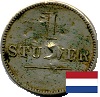
One more interesting thing for Dutch currency is that the alternation of the monarch's portrait for silver and base metal coins is as described by camerinvs, but for gold coins it is exactly the opposite!
New Zealand also only had four effigies of QE2, we never got the Jodi Clark one and we were also a bit off the pace with adopting each new one.
Gillick portrait - 1953 - 1965 (Strapped one only from 1956 onwards)
Machin 1967 - 1985 (Australia and UK went to Maklouf in 1985)
Maklouf 1986 - 1998 (UK went to IRB in 1998, we didn't)
IRB 1999 - 2022 (All 2020 coins have IRB portrait and haven't seen any 2022 ones yet)
We had a 5th portrait, which was a one off on 1979 - 1982 large dollar commem coins only designed by James Berry (NZ artist).
I love coins. Especially silver, gold and anything really old.
Member of the Royal Numismatic Society of New Zealand and the Auckland Numismatic Society
If I'm not mistaken, on circulating coinage the only unusual Canadian portrait for Elizabeth was that for the Jubilee 1952–2002 50 cents. They used the same portrait as the 1953 Coronation medal. I've never seen any of those Jubilee 50 cents in circulation, like over 99% of the population, but the Royal Canadian Mint issued a very large quantity of these as they apparently hoped to reintroduce the 50 cents into regular circulation. This attempt failed and since then, numbers are very low and the coin is only found in sets and other collectors' items: special rolls, proof and proof-like finishes, etc.
I got it in a generic group of 17 different dates of muck metal 50 cents, 1968 to 1985 (Except the scarce 1977) and I read it had 12 million coins. I forgot to take the photo of the other side and this has been blown up and recoloured from this shot.
I think with the 50 cents, its way too close in size and weight to the quarters. If they made it a bot larger and more distinctive, it may have worked, but with inflation, a 50 cent coin is practically worthless. They reduced the size from 29.5m to 27mm when they switched from silver to muck metal in 1968.
I love coins. Especially silver, gold and anything really old.
Member of the Royal Numismatic Society of New Zealand and the Auckland Numismatic Society